It has been a tumultuous few years, with inconsistent ability to focus on my academic work, and a corresponding inability to focus on my blog posts. However, I am getting my feet back underneath me in various ways: A better job, a better area, a nascent DC Area Metaphysical Club, and other things I will update on later. As such it seems time to also get back on track here. So, starting later this week, I will begin doing a mini-book club.
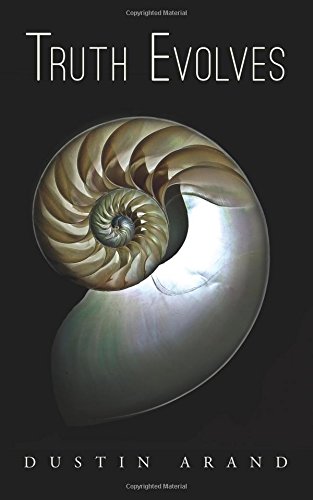
The target book is Truth Evolves by Dustin Arand, a local amateur philosopher (the type of amateur who writes books about the meaning of truth and evolutionary solutions to philosophical dilemmas), who has provided a good deal of stimulation. The book manages to make some pretty deep philosophical points, while staying an accessible read: Not an easy feat. If anyone is interested in joining along, it is available through Amazon, including a Kindle version.
I also want to thank Pablo Covarrubias for inviting me to take part in a special issue of the journal Ecological Psychology, dedicated to the 50th anniversary of James J. Gibson's The Senses Considered as Perceptual Systems (1966). Senses Considered is the first complete statement of the ecological approach. And, though many edges of that bumpy initial statement were later smoothed out, that book remains in many ways the most grounded and most comprehensive statement available.
One challenge that Gibson faced in his writing is that he did not like to repeat himself. Thus, after his final book (13 years later), he received bizarre criticisms, such as accusations that he did not understand physiology. This dumbfounded his fans as, while it is true that the 1979 book did not dwell on physiology, that is largely because Gibson had already written an book that spent more than half its pages giving a new interpretation to details of the physiology of perceptual systems.
As an animal behaviorist, by training, my favorite aspect of the 1966 book is its evolutionary logic. Because Gibson has aimed the book primarily at students of perception, trying to shake up their traditional ways of thinking, the novelty of his theory as an evolutionary theory of perception, is not front and center. I would argue that key concepts that Gibson introduces in Senses Considered make his approach the first truly evolutionary theory of perception ever offered.
Dr. Covarrubias has his ducks is such a nice row, that I received reviews very quickly, and I will elaborate the evolutionary underpinnings of Ecological Psychology here as I make revisions.
Hope all is well out there. I am very grateful to those who have kept reading my blog absent new posts, and I hope to reengage with all of you moving forward.
Wednesday, September 7, 2016

Tuesday, March 1, 2016
The Railway Man - Highlights of Holt's writing
I'm reviewing materials in preparation for an ENSO (Enactive Seminars Online) session on 3/3/16. This is one of the most important sections of The Freudian Wish (Holt, 1915). Something well worth meditating upon:
Let us consider, then, the higher forms of behavior, in human
beings, and the question of consciousness and thought.
If one sees a man enter a railway station, purchase a ticket,
and then pass out and climb on to a train,
one feels that it is clear enough what the man is doing, but it would be far
more interesting to know what he is thinking. One sees clearly that he is
taking a train, but one cannot see his thoughts or his intentions and these
contain the 'secret' of his actions. And thus we come to say that the conscious
or subjective is a peculiar realm, private to the individual, and open only to
his introspection. It is apart from the world of objective fact. Suppose, now,
one were to apply the same line of reasoning to an event of inanimate nature.
At dawn the sun rises above the eastern ridge of hills. This is the plain fact,
and it is not of itself too interesting. But what is the ‘secret’ behind such
an occurrence? "Why this is, as
everybody knows, that the sun is the god Helios who every morning drives his
chariot up out of the East, and he has some magnificent purpose in mind. We cannot
tell just what it is because his thoughts and purposes are subjective and not
open to our observation. We suspect, however, that he is paying court to Ceres,
and so cheers on by his presence the growing crops."
Monday, February 1, 2016
Why Experiment?... Why Science at All?
A lot of people wonder what the big deal is about experiments. Why do people care if, say, some particular dietary supplement has been supported by randomized experiments or not? If taking two St. John's wort pills a day helps me out, and my friends say it helps them, why should anyone care what some guy in a lab coat thinks? To answer that question, we need to start with explaining science in a slightly different way than most people are used to.

Wednesday, November 18, 2015
Political correctness IS curtailing free speech, and that's just fine!
There is much talk about political correctness on college campus. This is including, but not limited to, discussion about Halloween costumes, trigger warnings, safe spaces, and issues involving feminism and race relations. I am not going to write here about my opinions regarding political correctness, or trigger warnings, or any of those issues. Instead I am going to focus on a very weird dynamic of this dialog: The fight over whether or not being politically correct is a restriction on free speech.

Friday, August 14, 2015
Does Nature Versus Nurture Makes Sense?
 My PsycCRITIQUES review is about to release for James Tabery's book "Beyond Versus: The Struggle to Understand the Interaction of Nature and Nurture." Here are some highlights:
Monday, June 8, 2015
The academic job market has gotten harder, very recently
There have been many stories recently about the "overproduction" of Ph.D. students in science, and about the increasingly competitive job markets. This isn't going to be a comprehensive post about that, but rather a highlight of a short, but significant paper that might otherwise be under the radar. It is Academia's never-ending selection for productivity by Francois Brischoux and Frederic Angelier, in the journal Scientometrics. It's focus is on evolutionary biologists hired by the National Centre for Scientific Research France, between 2005 and 2014, 55 people in total from what I can tell. The NCSR has a stable and formulaic hiring process, which makes easy to compare hires across years. Despite the small sample, and the narrow focus, I suspect the same trends would be replicated in most scientific fields, at most academic institutions, in the U.S. Here is what I thought was the crucial paragraph (p. 355. Some parentheticals removed):
Sunday, May 31, 2015
Stats Help Part 2: Null and Alternative Hypotheses
Many struggle with discussions of null and alternative hypotheses. The logic behind phrasing research questions in that way can be a bit unintuitive. The logical involves what you can or cannot prove given an if-then statement, and I'll put a paragraph about that down at the bottom. In the meantime, here is a much easier way to understand what is going on:
Subscribe to:
Posts (Atom)